

A shared responsibility for a clearer, healthier lake
Lake Tahoe has a way of stopping people in their tracks, with an impossibly blue color that’s like no other alpine lake. But like any natural resource, there are threats to its beauty, ecology, and quality.
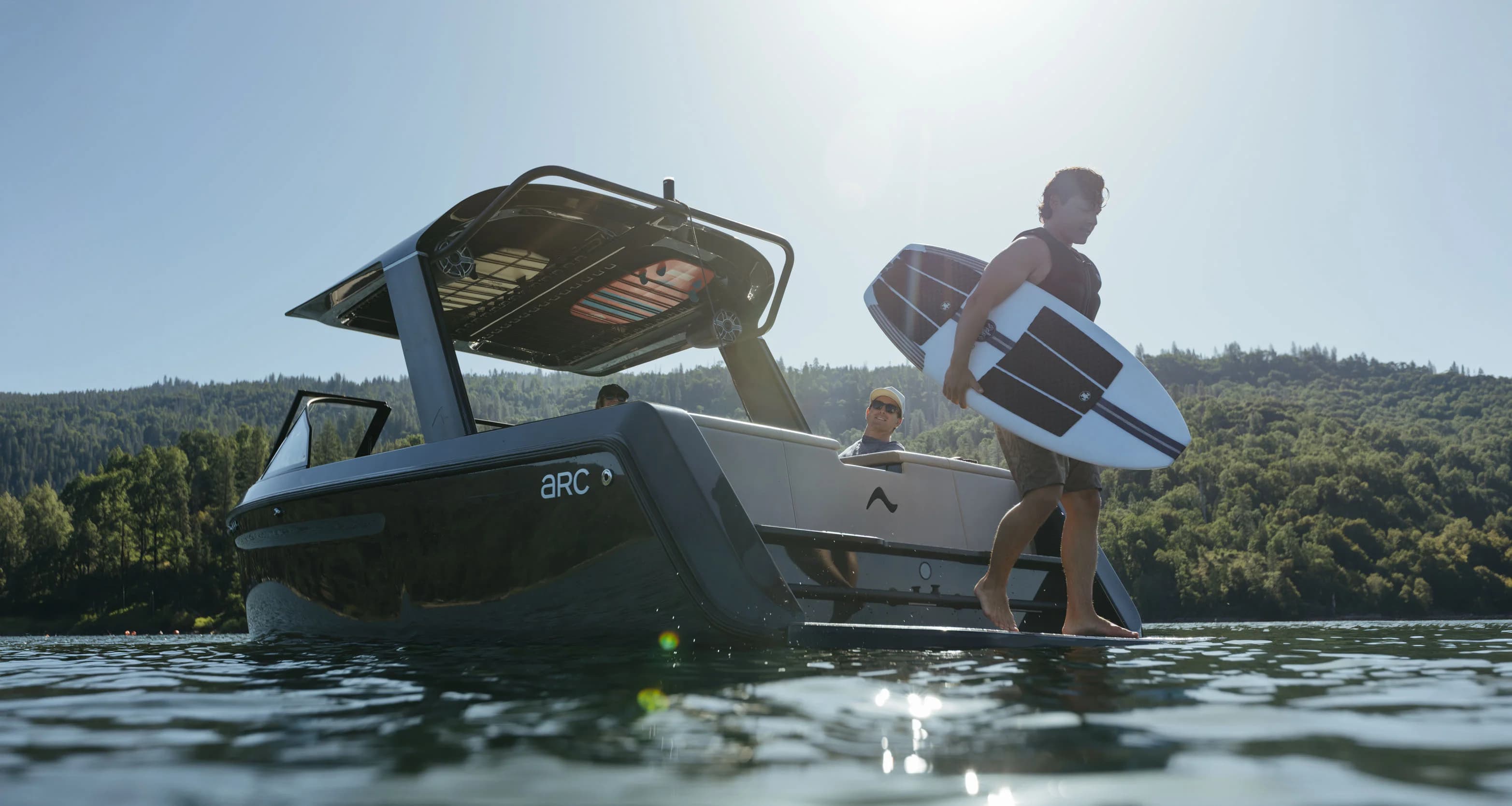
As a California-based company with boats on Lake Tahoe, this subject is important to us. And our time on Tahoe shapes how we think about the future of boating. A few years ago, we connected with Keep Tahoe Blue, and this Earth Day we are highlighting the work they’re doing on the lake through programs like Eyes on the Lake. We recently caught up with Jesse Patterson, the Chief Strategy Officer at Keep Tahoe Blue, to learn more about invasive species, how they enter the lake, and how we can all make a positive impact.
A life dedicated to the water
For Patterson, the connection to Tahoe is grounded in science, experience, and passion for the lake.
Before moving to the Sierra, Patterson worked as a marine biologist at UC Santa Barbara, spending years diving in the Channel Islands and studying the important relationships that hold marine ecosystems together. But the through line is simpler than that.
“Nature and water have been the guiding light of everything I’ve ever done. I knew I wanted to be in the water, on the water, around the water — and do things to protect it.”
He arrived in Tahoe in 2012, drawn in part by the landscape, but more so by the opportunity to apply his experience to a place where the stakes feel immediate. The organization itself (now nearly 70 years old) has long operated at the intersection of science, policy, and public awareness, and at the center of their work is a single idea: preserving the lake’s clarity.

“The blue is everything. Without it none of us would be here. If we lose the blue, we lose everything.”
That color is not incidental. Tahoe’s clarity is a perfect mix of depth, purity, and natural water inputs. These conditions allow light to travel and reflect in a way that gives the lake its distinct appearance. Unfortunately, these elements are also what makes it vulnerable.
“That’s what draws everyone here,” he says. “And once it’s gone, you don’t get it back.”
The risk below the surface
One of the most pressing threats to Tahoe’s clarity comes from aquatic invasive species (AIS). These are non-native plants and organisms introduced into an ecosystem where they don’t belong. Once established, they can spread quickly, outcompete native species, and alter water conditions in ways that reduce clarity over time.
At Tahoe, the risk has been on the radar for years. Early efforts focused heavily on motorized boats, with inspection programs designed to stop invasive species before they entered the lake. But that understanding has since evolved.
“We’ve been aware of the threat for several decades now,” Patterson says. “But mostly we thought they were only coming in on motorized boats. And just recently, we’ve realized they can get in on non-motorized boats.”
That shift matters, as it expands the list of potential entry points far beyond what was once assumed. Now paddleboards, kayaks, inflatables, fishing gear, and even wetsuits can carry harmful species like New Zealand mud snails and golden mussels.
Once invasive species take hold, the options for removal are limited, particularly in a lake with some of the highest water protection standards in the world.
“The best solution is prevention,” he says. “You don’t undo that without some pretty extreme measures.”

Putting more eyes on the prize
Lake Tahoe is simply too large for a small team of biologists to monitor alone.
Eyes on the Lake was built with that constraint in mind. The program extends observation beyond a small group of specialists and into the broader community of people who are already on the water, often daily. The concept is simple: protect while you play.
Volunteers are trained to identify a short list of invasive plants and report sightings while they’re on and around the lake. It’s a system designed to work in the background of normal aquatic activity, rather than requiring a separate effort.
“Make the right choice, the easy choice,” Patterson says. “People are here to enjoy themselves. They don’t want to overthink it.”
That principle carries through to prevention as well. The most effective steps are straightforward: clean equipment, drain any water, and allow it to dry before entering the lake.
“Clean, drain, dry,” he says. “It’s not complicated.”
What matters is repetition. The more consistently those steps are followed, the lower the likelihood of introducing something that is extremely difficult to remove.

Creating a shared science
The structure is simple: science identifies the risk, but the response depends on participation.
“Our challenge is convincing people there’s a problem worth addressing,” Patterson says.
That’s not always easy when Tahoe still looks as blue as it does. The visual experience suggests stability and purity, even when underlying conditions are changing.
“The beauty of science is it can show you problems before you can see them with your own eyes. By the time you see an issue — like green, nasty water or a bunch of invasive species — it’s likely too late.”
That’s where programs like Eyes on the Lake are effective. They close the gap between what is measurable and what is visible, giving people a role before intervention becomes reactive.
At a place like Tahoe, that matters so much. The region spans multiple jurisdictions through California and Nevada, supports millions of visitors each year, and operates without a single governing framework to manage its use.
“Who’s going to protect it?” Patterson says. “You and me, honestly.”
Raising the bubble curtain for prevention
Beyond public participation, Keep Tahoe Blue is also using the power of bubbles to act as a barrier of protection for the lake.
In the Tahoe Keys, a hotspot for aquatic invasive species, Keep Tahoe Blue and its partners have deployed a bubble curtain, which is a steady stream of air bubbles rising from the lakebed to form an underwater barrier across key channels.
“We created a wall of bubbles that allows boats to pass through while blocking the aquatic invasive weeds we’re trying to stop,” Patterson says.
The idea is simple, and inspired by nature. “Humpback whales use bubble curtains to corral food when they’re hunting,” he explains. “We thought the same concept could stop floating weeds from spreading.”
Tested since 2018, it’s a low-profile solution that does exactly what Tahoe needs: protect the lake without getting in the way of enjoying it.
Ways to get involved
Keep Tahoe Blue offers a straightforward entry point for everyone.
Sign up for an Eyes on the Lake training — both online or in person. Learn how to identify invasive species, understand the prevention basics, and apply that knowledge the next time you’re on the water with their reporting form.
You can also bring awareness into what you already do. Whether you paddle, swim, or boat, the key ingredient is for all of us to pay better attention. No matter how you boat or play on the water, we can all follow the simple three steps:
- Clean
- Drain
- Dry
Just as important: share it. Tell your crew and spread the message to everyone you share the lake with. The more people who know what to look for and how to prevent it, the stronger the system becomes.
Keeping Tahoe blue isn’t the work of one group. It’s a collective effort from all of us, built on small actions to help protect this remarkable lake that brings us so much joy.


