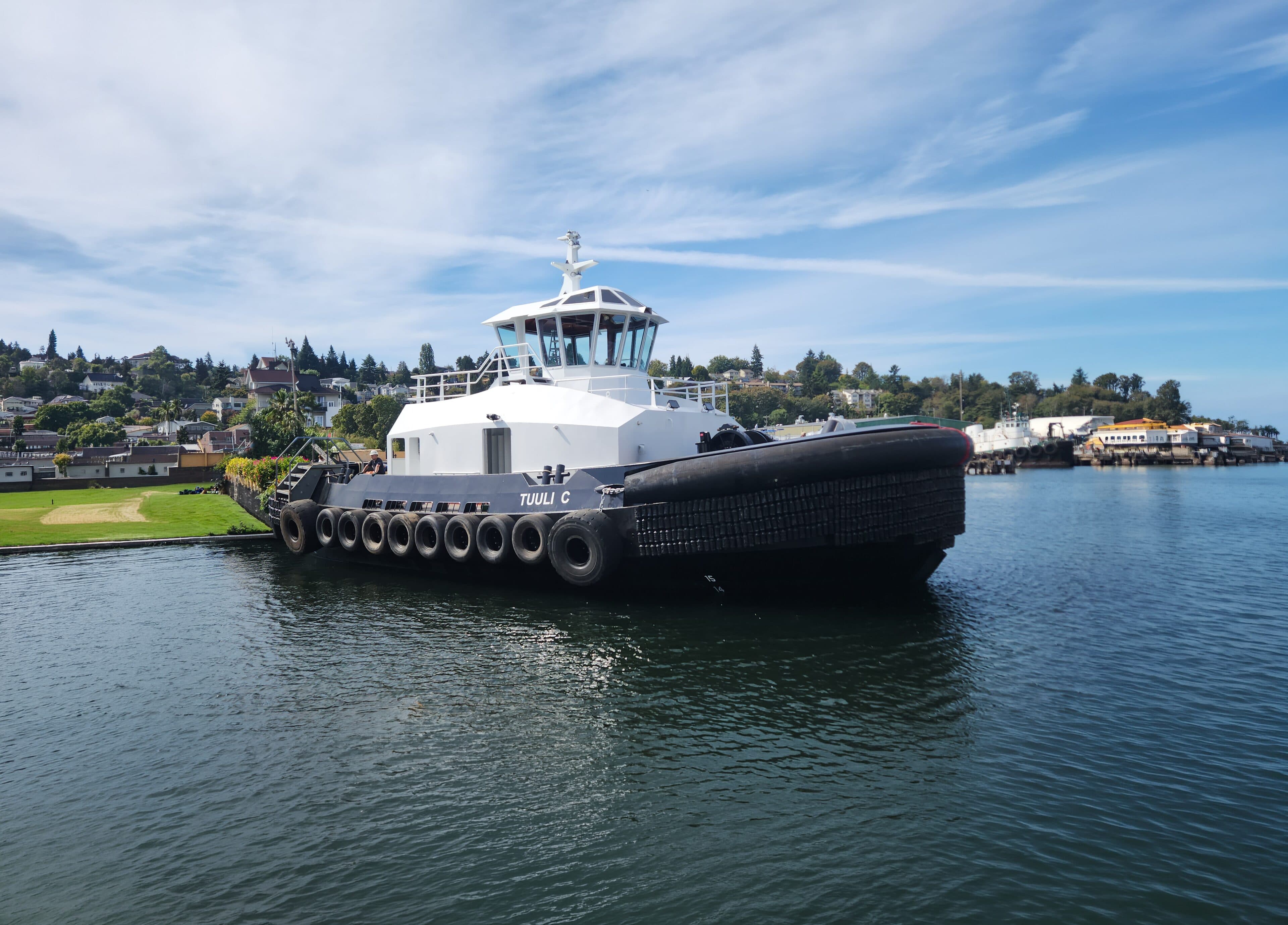
Tuuli C docked in Seattle

Tuuli C's journey to Los Angeles

Follow along as our first electric tug navigates down the Pacific coast to its new home port in San Pedro Bay.

Meet Tuuli C

Pronounced “too - lee”

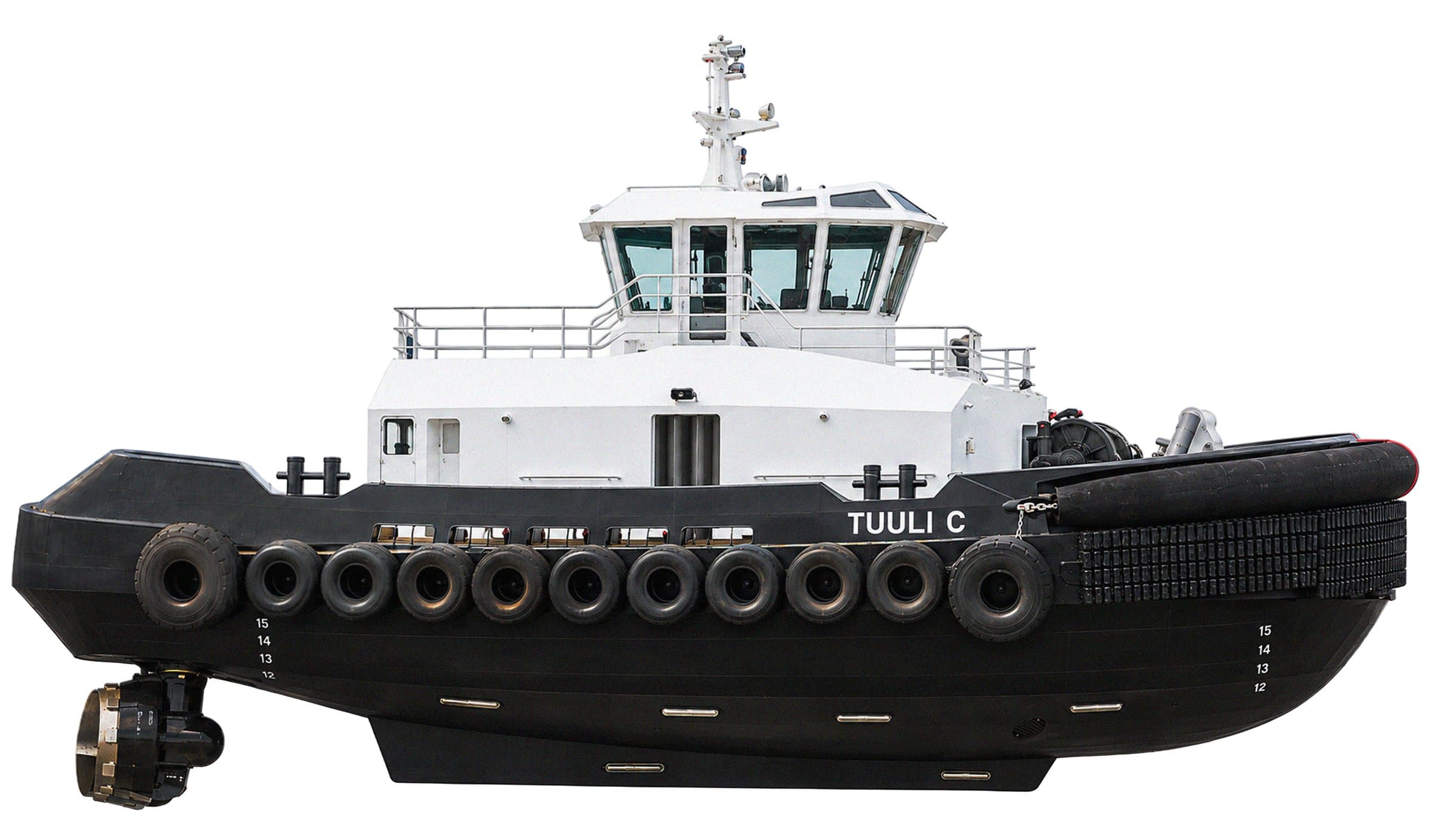
Side profile of Tuuli CDownload spec sheet
Battery-only runtime
12 hour
To full charge
3 hours
Of CO2 displaced yearly
1,421 tons
Battery
6 MWh

Tuuli C live location

47.661° N / 122.370° W

#WaypointNMState
01Snow & Company0WA
02Cape Flattery+120WA
03Columbia River Bar+253WA
04Golden Gate+799CA
05Point Conception+1,032CA
06Port of Long Beach+1,165CA
InstrumentsUpdated just now
Speed0.0knots
HeadingN0°N
#NMState
01Snow & Company0WA
02Cape Flattery+120WA
03Columbia River Bar+253WA
Full instrument cluster

Tuuli’s journey will begin soon

High performanceClean powerLower operating costs

Learn about Tuuli C

01

What is Tuuli C’s job?

Container ships aren’t designed to maneuver themselves into a tight harbor, so Tuuli C helps them navigate and dock.

Built in partnership with Snow & Co. and operated by Curtin Maritime, Tuuli C will serve the ports of Los Angeles and Long Beach.

02

Why electric-powered tugboats?

A ship-assist tug needs enormous power, but only in short bursts. A tugboat will spend a significant amount of time on standby or cruising at low speeds between pushes and pulls.

Where a traditional tug would keep its main engines running, wasting fuel and wearing down the engines, the electric propulsion system on Tuuli C draws only the power it needs.

The result is lower emissions and far fewer hours of mechanical wear.

03

Inside the build

Take a closer look at what went into Tuuli C.

  • Interior view of the structural framing for Tuuli C’s battery compartment.April 8, 2025
  • Tuuli C’s bare steel hull suspended by overhead crane during assembly.December 9, 2025
  • Technician operating pipe beveling machine inside Tuuli C’s thruster trunk.February 23, 2026
  • Zach assembling battery rack on the bench rig at Arc HQ, in Torrance, California.March 10, 2026
  • Josh connecting communication cables to battery modules along the ESS rack.March 10, 2026
  • Tug software running on the bench rig.
  • Dual helm joystick controls on the bench rig.
  • Tuuli C hull gets anti-fouling paint at Snow Shipyard in Seattle.April 8, 2026
  • Painting the underside of Tuuli C’s hull.
  • Technician installing azimuth thruster unit into hull mount.
  • Preparing Tuuli C’s hull for splashing in Seattle, Washington.April 14, 2026
  • Crane hoisting a battery module into Tuuli C’s battery room.June 18, 2026
  • Installing battery module into racks.June 18, 2026
  • Cabling and power management in the battery room.June 18, 2026
  • Tuuli C deck housing under construction.August 31, 2026
  • Hoisting painted deck housing onto Tuuli C.August 31, 2026
  • Tuuli C on the water near Snow Shipyard in Seattle, Washington.
04

Electric tug vs diesel tug

Tuuli C has roughly a fifth of the moving parts compared to a diesel vessel in the same class. Fewer moving parts means fewer things that wear out. Plus, she runs a full shift on a single charge.

Tuuli C’s capacity:

Worth of energy onboard
6 MWh
Of use on a full charge
12 hours
To fully recharge between jobs
3 hours
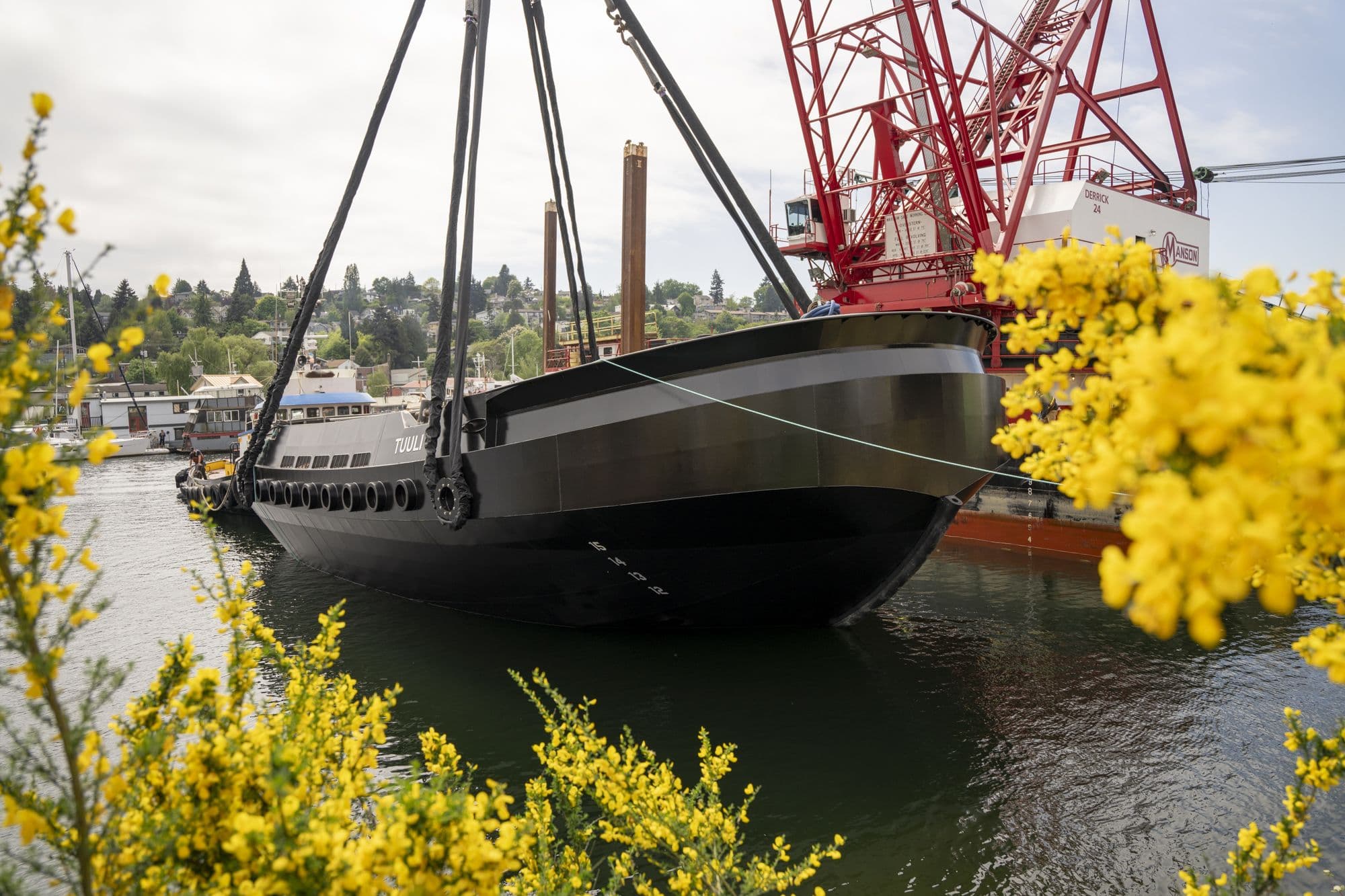
Tuuli C lifted by crane at Snow & Company
05

Improving work. Reducing emissions.

The twin ports of Long Beach and Los Angeles are the largest fixed source of smog-forming pollution in the region. Tugboats are among the largest contributors, despite being the smallest vessels in the harbor.

Tuuli C’s environmental impact:

Offset yearly
1,421 tons CO₂
Offset yearly
14.5 tons NOx
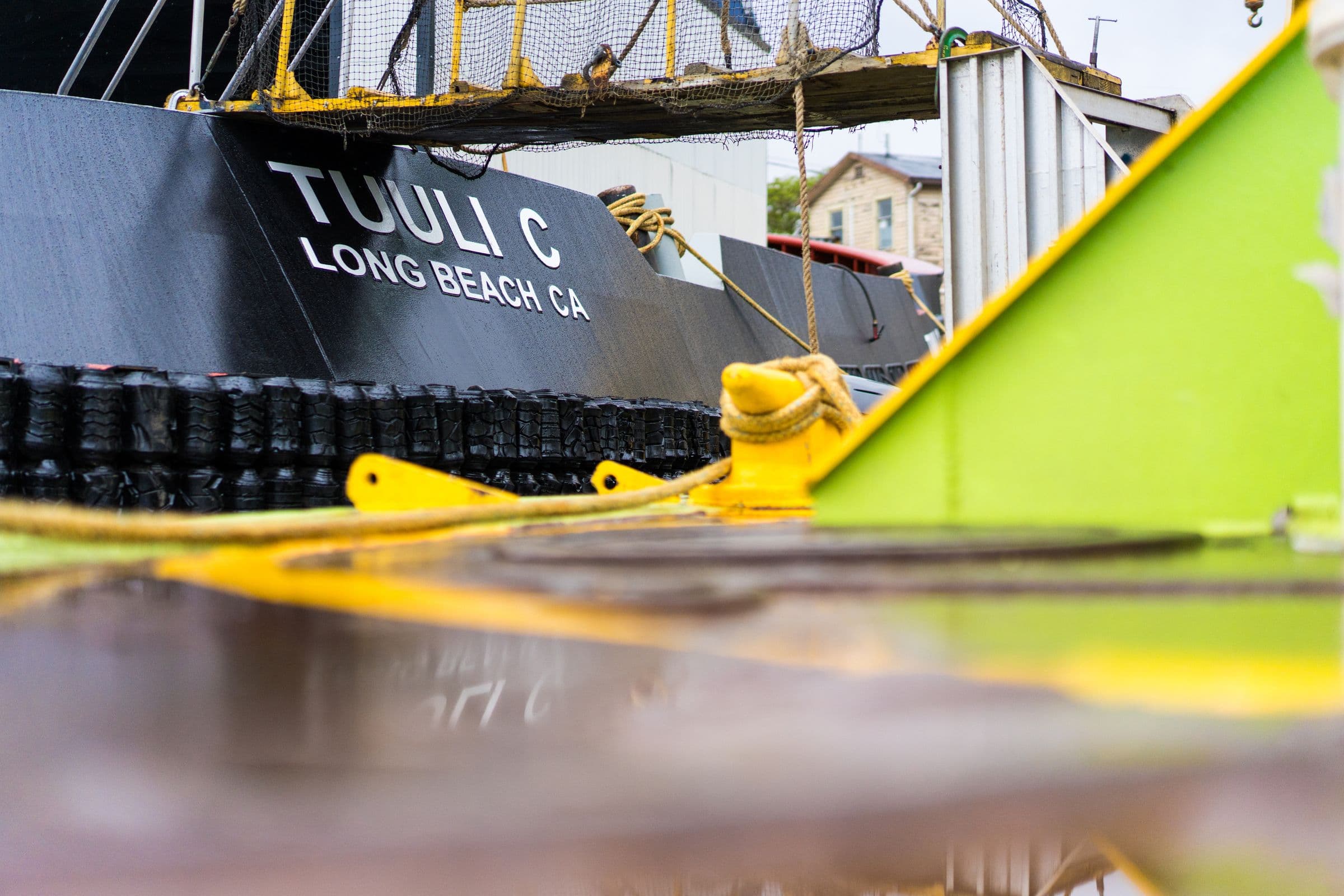
Tuuli C’s stern, marked Long Beach CA
06

3MW of power output through the thrusters

Tuuli C's thrusters deliver 3 megawatts (MW) of power – over 4,000 horsepower. Her thrusters generate 110,000 pounds of force, giving her a “bollard pull” rating of 55 U.S. tons.

What 3MW looks like:

Freight locomotive
1
Costco warehouses
3
DC fast charging stalls at full output
12
07

Torque for the toughest jobs

An electric tugboat moves massive container ships the second the captain hits the throttle. With more control and instant power, Tuuli C helps ships move through the port quickly and efficiently.

08

Fun fact

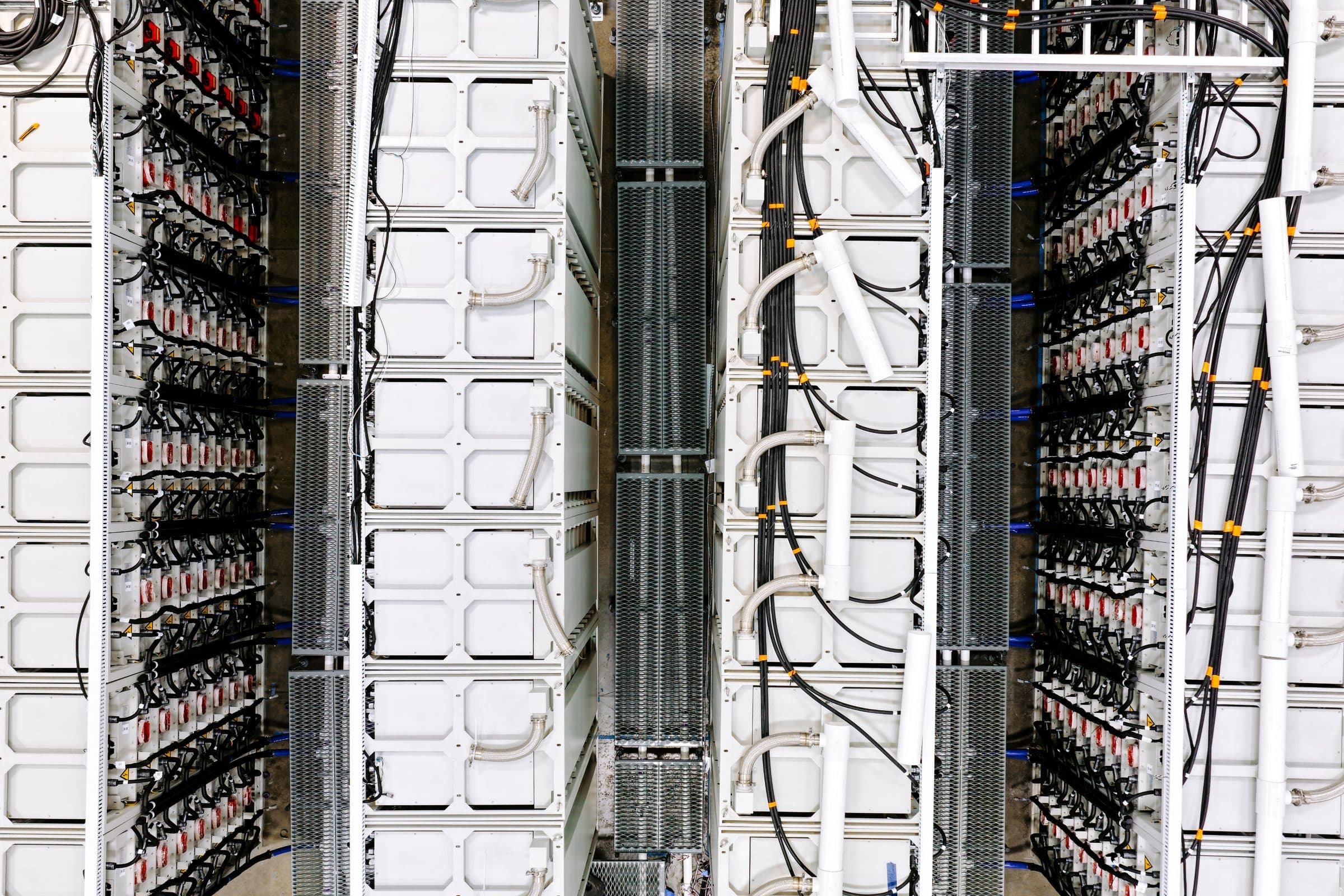
Tuuli C carries 6 megawatt-hours of battery storage across 30 racks and 210 battery modules. That’s the battery capacity of 100 electric cars.
Tuuli C’s battery racks and cabling from above

Stay up to date on all things commercial

Get exclusive updates as we grow our commercial programs

Frequently Asked Questions

Harbor tugs run short, repetitive routes and need brief bursts of high power. Electric propulsion fits that work: instant torque when it counts and less maintenance overall. Between jobs, batteries can keep lights, radios, and other onboard systems running without a diesel generator. Those advantages add up with every shift.

Electric tugs are designed to lower the cost of ownership, with competitive build costs and savings in fuel, maintenance, and reduced downtime. There are no main diesel engines to keep idling while the propellers are stopped, and batteries can power onboard systems between jobs. Exact savings depend on the configuration and how you operate.

Reach out to commercial@arcboats.com and we will work through the numbers with you.

Yes. Matching diesel performance is a design requirement for our electric tug program. Each tug is sized for its ship-assist role, with the power and bollard pull the work requires.

Tuuli C is designed for a 12-hour working day of escorting and docking ships.

Every tug sends its data to a telemetry system in real time. That gives operators a live view of the fleet and each vessel’s performance.

No. Tuuli C can charge from industrial shore power already available at most tug docks. We also support operators who choose to install fast chargers to shorten charging time.

Compared to a conventional Tier 3 harbor tug, each electric tug cuts more than 1,400 tons of CO₂ and 14.5 tons of NOx a year. That's about the same as taking 300 passenger cars off the road.

A full charge takes about 3 hours using both Megawatt Charging System (MCS) inlets for DC fast charging. With 400-amp, 480-volt AC shore power, a full charge takes about 15-18 hours. Arc helps plan charging around your operating schedule.