
Stone cold performance: how the Arc Sport handles winter testing on and off the water
Nov 18, 2026
Off snowy shores and in freezing temperatures, we pushed the Arc Sport to prove that great boat days can happen well past summer.
At Arc, testing is a key component to our process. We drive our boats through a range of conditions and environments to ensure owners get the best possible experiences on water all year long—including the tough, cold-weather months of winter.
Normally, this is the time of year gas-powered boats need to begin the arduous process of winterization. With the Arc Sport, things are much different. Thanks to its electric powertrain and simplified winterization process, you can easily prepare your boat for storage—or keep it on the water to take advantage of those unexpectedly perfect (if very cold) days.
But the proof is in the process. So our testing team set out to Lake Tahoe, CA and Shakopee, MN to see what would happen when they took the boat for a few hot laps in the snow and how it fares when stored in subzero temperatures.
We put the boat through the wringer, testing everything from the closed-loop cooling system and heated seats to the wake itself. And of course, the battery. Not only did we have a blast, we also made some discoveries that proved how well the boat can perform well after the snow starts falling.

A quick background on Arc’s battery architecture
To give some context, cold weather can present a particular challenge for EV batteries. As temperatures fall, the chemical reactions inside lithium-ion cells slow down, increasing resistance and making it harder for batteries to deliver power or accept a charge. That can mean reduced range, slower charging, or temporary power limitations until the battery warms up.
To solve this, Arc engineers designed a battery system with extra advantages built into the architecture.
Moving a boat through water takes considerable energy, especially when creating the large, rideable waves that make wakesurfing possible. That demand naturally generates heat within the battery during operation, helping it warm as the boat gets moving.
Normally, a battery's cooling system kicks in to help manage that temperature to prevent overheating. Many EV batteries use cooling plates that sit directly against the battery modules to draw away excess heat. But in colder conditions, those same plates can absorb heat as the battery warms up.
Arc's battery system is a little different.
"The way that we do our cooling in the battery is largely by convection rather than cold plates," explains Khaled Elmasri, Senior Electrical Engineer at Arc.
The Arc Sport utilizes a hybrid cooling approach, with a large cold plate transferring most of the heat and an air-cooled system balancing the temperatures within the pack. The air-cooled system circulates air on all sides of the battery modules, ensuring even heating, whereas a cold plate usually only contacts one side.
This allows the modules to warm up more independently, without also having to heat the cooling plates and liquid coolant circulating through the system.
Additionally, the boat’s cooling system has an electronic valve that allows the boat to control whether coolant enters the battery. This smart logic helps keep the battery at its ideal temperature, on both hot and cold days.
So what does all this mean?
Basically, the entire system manages excess heat during demanding use while allowing the battery to warm more efficiently when temperatures drop.
Combined with the Arc Sport's substantial battery capacity (about 3x the size of a Tesla Model 3) and carefully selected battery cells, this design helps deliver consistent power and performance across a wider range of conditions and seasons.
As Khaled puts it, "With the Arc Sport, we almost never have any limitations."

The Tahoe performance test
Winter in Lake Tahoe isn't exactly traditional boating weather. But the Arc Sport isn't exactly a traditional boat. With air temperatures between 34°F and 46°F, water temperatures in the upper 40s, and snow-capped mountains in every direction, it was an ideal setting to put the boat's cold-weather performance to the test.
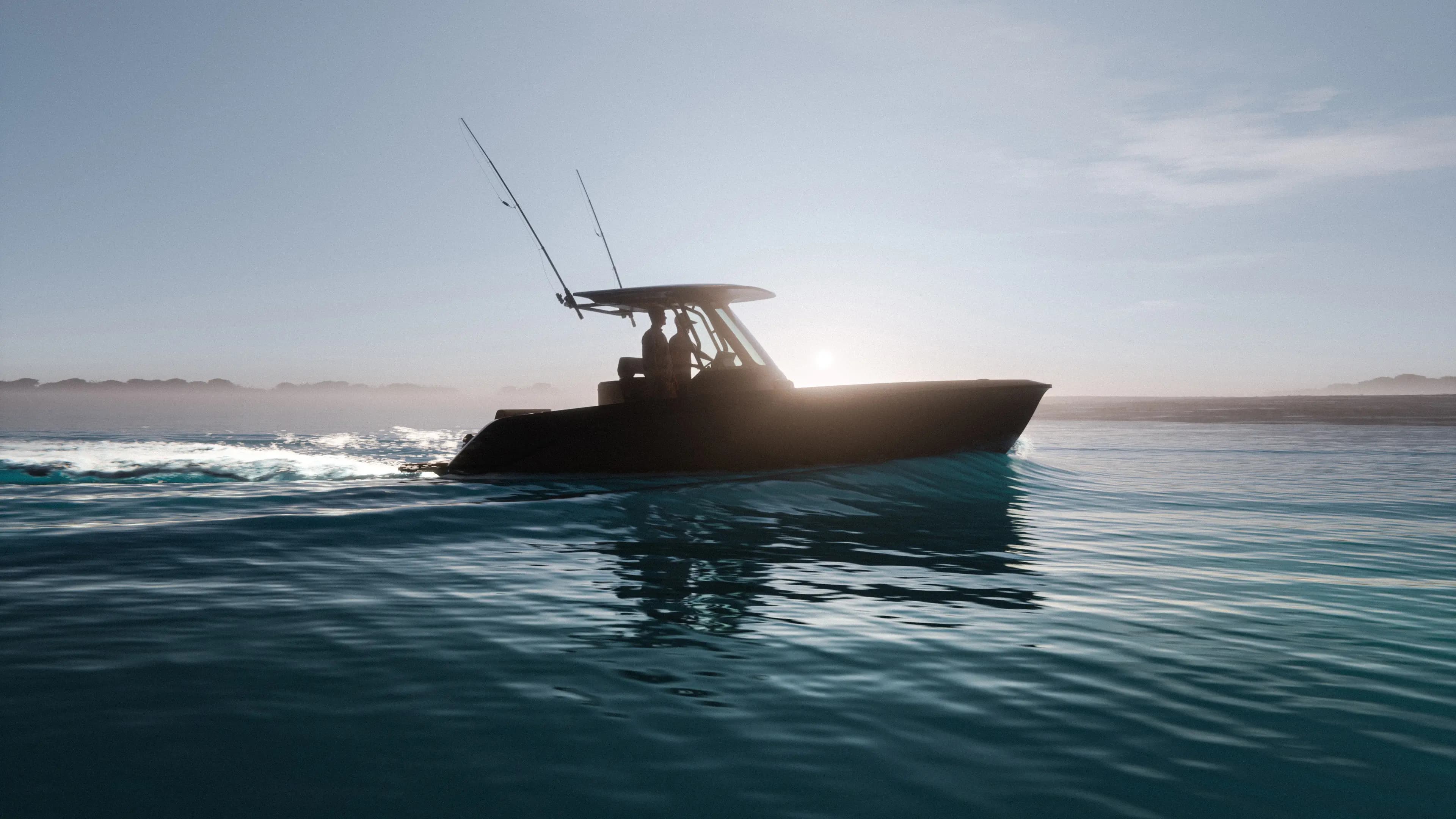
Over several days, our team put the boat through a series of trials on the water, including two sustained runs at 35 mph. Each lasted more than an hour, taking the battery from over 90% charge to nearly empty.
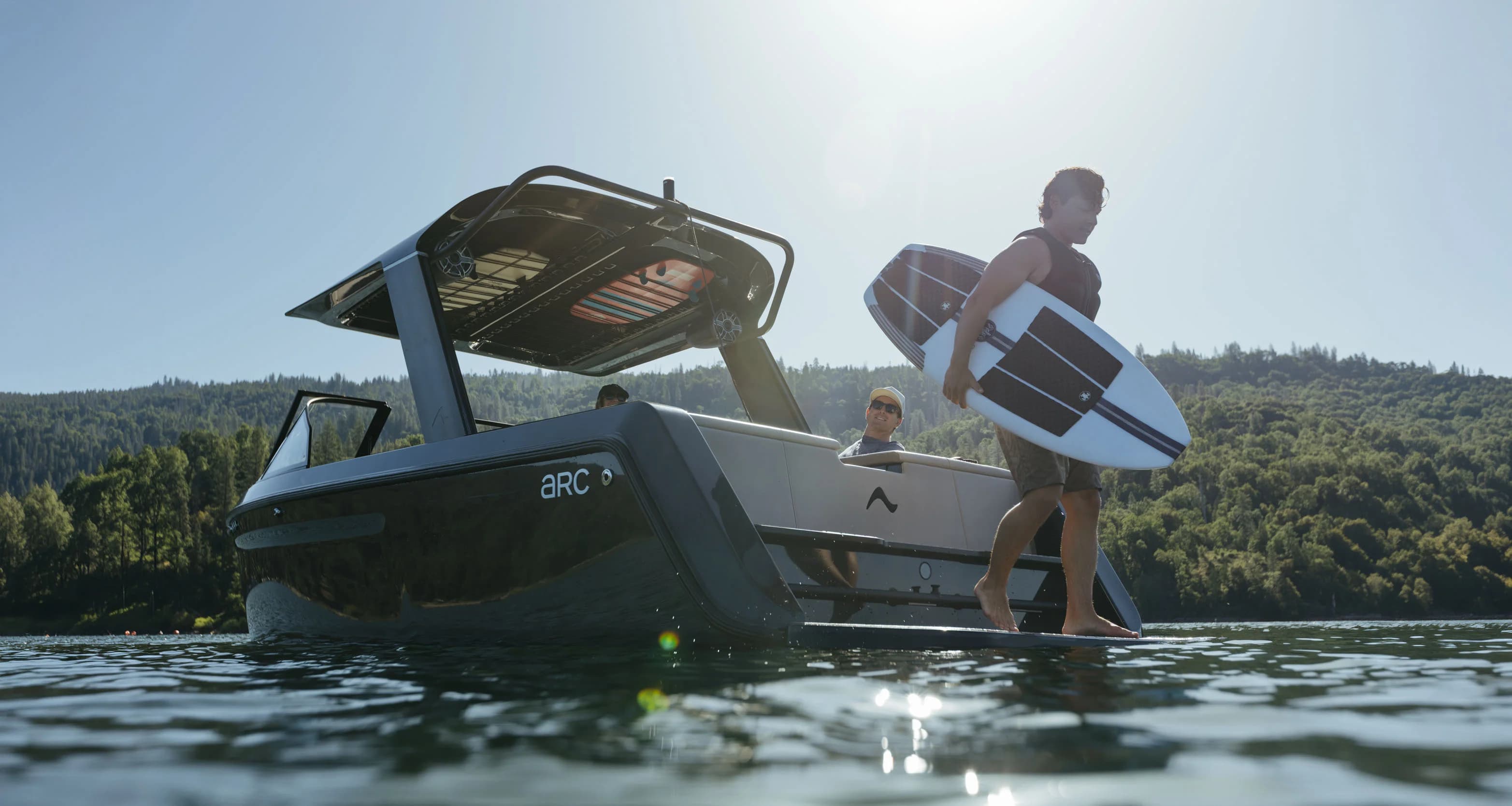
Throughout both runs, the Arc Sport delivered normal functionality and battery performance without unexpected power limitations. Our team even hopped behind the boat for a few turns.
“It was amazing to see how the boat performed in those conditions,” says Blain Chafin, Senior Test Technician at Arc. “Plus the mountains, the glassy water, and wakesurfing in dry suits. That was a epic day to say the least.”
Of course, performance on the water was only half the equation. Our team also wanted to see how the battery would handle charging in colder conditions.
The Arc Sport successfully completed several charging tests, including a DC fast-charging session at a public EVgo station on a snowy day and another at a marina that brought the battery from empty to 98% in approximately 90 minutes. The boat also charged overnight on a Level 2 charger in near-freezing temperatures.
While some of the marina's charging equipment had some issues and required workarounds, the boat itself demonstrated its ability to drive and recharge normally in the conditions.
The takeaway: a cold, snowy day doesn't automatically mean a day off the water. Just make sure you bring a few extra layers, a thick wetsuit, and some good, strong coffee.

The storage test in Minnesota
Enjoying a cold day on the lake in California is one thing—leaving a boat outside through the heart of winter in Minnesota is an entirely separate challenge.
Across the Midwest, freezing lakes and subzero temperatures mean most boats spend several months out of the water. Owners typically winterize their vessels, cover or shrink-wrap them, and store them on trailers or inside storage facilities until spring. It's a necessary part of protecting gas-powered boats from the elements, but it also adds more headaches and bills.
For our testing team, this environment provided a unique opportunity to not just demonstrate how easy it is to winterize the Arc Sport, but also to confirm that the freezing cold causes no damage to the boat’s internal systems.
We brought the boat to Shakopee, MN, prepared it for winter storage, and left it outdoors for approximately nine weeks. During that time, temperatures dropped to −15°F, a full 11 degrees below the boat's recommended minimum storage temperature.
When the team returned, the main high-voltage battery, drivetrain, ballast system, bilge pumps, and seacocks had made it through the extreme cold without damage.
"The other thing that surprised us was how ordinary the boat's condition was afterward," adds Blain. "We ran the same dock-side checklist before and after storage, and the results were nearly the same. The cold didn't move the needle."
While the test identified a few issues associated with early development hardware, the findings helped Arc refine its designs, software, and winter storage guidance for owners.
Going the extra mile
Our cold-weather testing program is just one example of how far we go to refine and rethink the best wakeboat on the water. We know every lake day won’t be perfect, so we work tirelessly to challenge our technology and show people that the Arc Sport can do much more than the average gas-powered vessel. Whatever the season, the goal is always the same: more confidence in our designs, less maintenance and headaches, and more freedom to enjoy the water on your terms.


