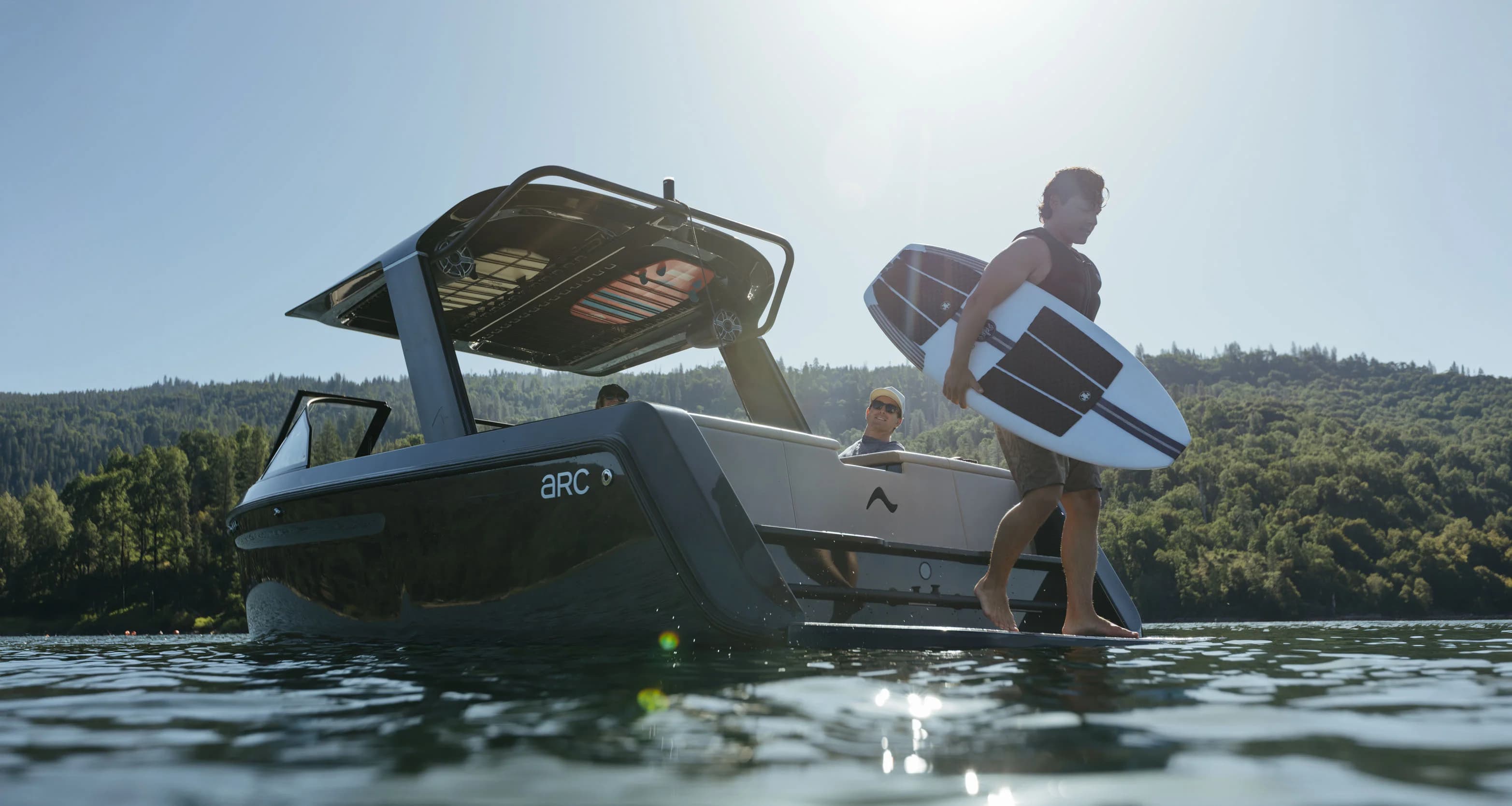
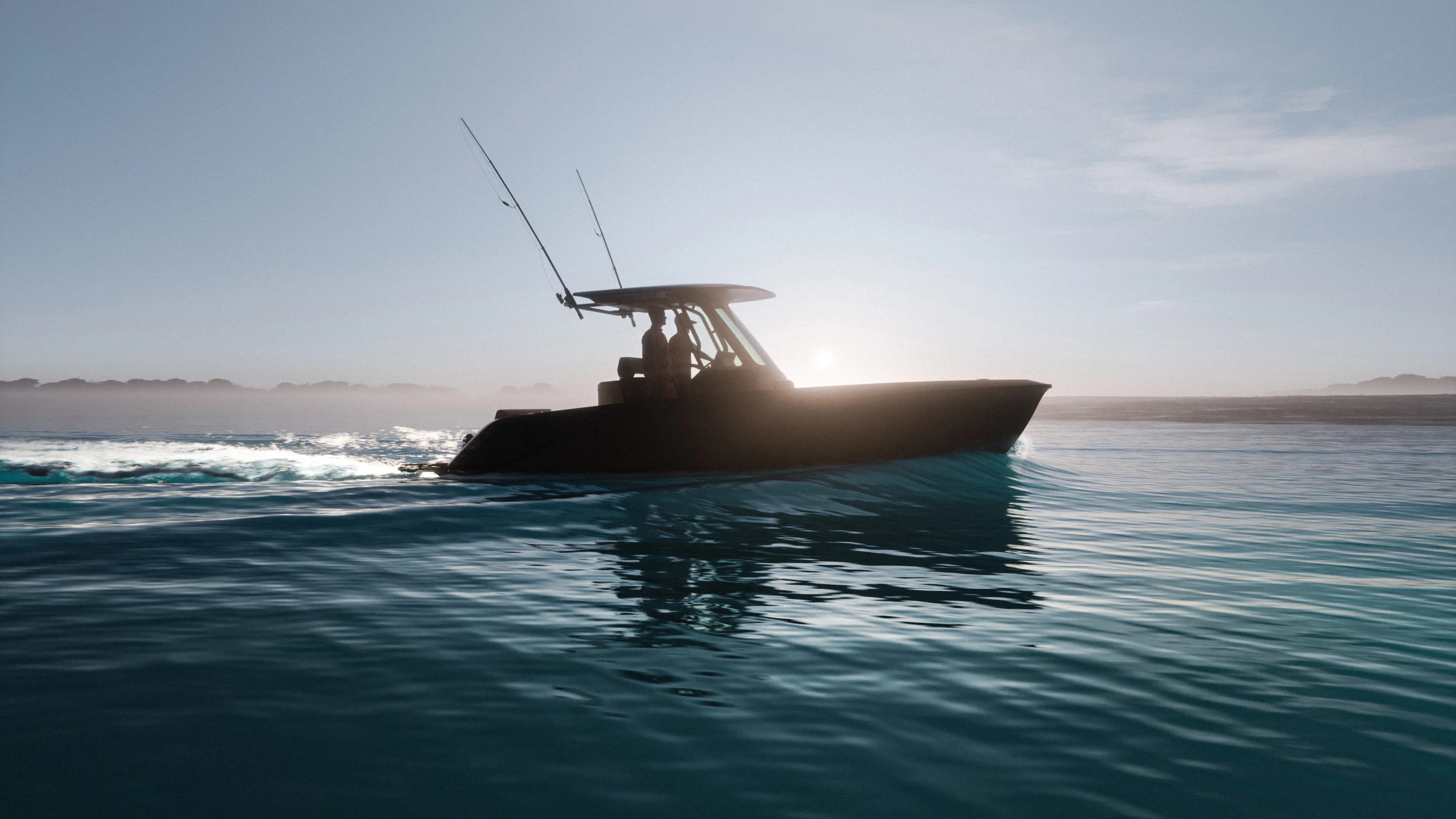

By now you’ve seen the Arc Sport in action. But we want to take you deeper, going up close with the engineers and technology shaping the future of boating. And there’s no better place to start than the wake.
For decades, the wake boat industry has chased a familiar formula: more ballast, stronger horsepower, and bigger waves. Our team asked a different question: how do we create a high-performance wake boat with consistent waves that can be customized to a wider range of riders and boards?
To find the answer, we sat down with Max Queenan (Arc Manager of Commercial Systems Engineering) and Vishwa Kaniyur Neelakandan (Arc Mechanical Engineer) to learn how first-principles engineering, software, and electric propulsion are reshaping one of wakeboarding's oldest problems — and helping us create the best wake possible.

Engineering as one system
Before a prototype ever hit the lake, the team broke the problem down to its fundamentals. Hull shape. Speed. Center of gravity. Battery placement. Ballast. Surf tabs.
Instead of treating each as its own engineering project, they treated these individual elements as one interconnected system.
"First principles engineering is about breaking things down into the fundamental truths. What does the physics actually say?" Max explains.
Rather than engineering the hull, propulsion, ballast, and surf system independently, the team developed them together — constantly adjusting one variable against another until the boat performed as a single, connected system. And with each adjustment, new opportunities were created for the team to explore and refine.
“The wake is really complicated,” says Max. “There are many factors or degrees of freedom that affect the wake. The length of the hull, how heavy it is, the center of gravity, and the speed you're going.”

Once the team understood how those variables worked together, they focused on one of the biggest advantages of an electric platform: finely-tuned consistency. When it comes to speed, the slightest change can impact the shape and feel of a wave. While traditional wake boats can drift slightly above or below their target speed as conditions change, the Arc Sport's electric propulsion responds almost instantly to maintain the precise speed riders expect.
"Wake shaping really comes down to tenths of a mile per hour," Vishwa adds. "With an electric motor, keeping those exact speeds becomes much easier and much more consistent."
That precision gave the engineering team something few wake boats can offer: a great wave that’s both repeatable and versatile. Whether you're chasing a long, mellow wave or a steep, competition-ready face, the engineering behind the Arc Sport ensures every rider gets a personalized experience with a wave tuned to their needs, desires, and riding style.
"When we look at making a great wave, it's not a singular wave. It's the gamut of waves we can make," Max says. "We want you to choose the wave you want and have it be the same every day you're out on the water."
Connected and designed to evolve
That “systems” approach extended beyond the hardware.
Because Arc engineers also developed the propulsion system and software, they could tune every piece to work together. Tiny changes in motor response, battery output, and cruise control all became part of shaping the wave.
And the biggest advantage of treating the boat as one connected platform? It never stops improving.
By designing a cohesive software, propulsion, and surf system, they can continue to dial in the riding experience long after the boat leaves the factory, using data to make constant enhancements.
“We can tune what we're testing with immediate data feedback and accomplish more in less time,” says Max.
Every session becomes another opportunity to learn.
Every software update becomes another opportunity to improve.So the more you ride, the smarter, smoother, and more personalized the boat (and the wake) becomes.

Made for longer days
For the engineering team, building a great wake was only half the challenge. It also had to last.
Range is one of the biggest topics surrounding any electric vehicle, and the engineers knew Arc couldn't ask customers to trade time on the water for cleaner propulsion.
The Arc Sport needed to deliver the same full day of riding, surfing, and cruising that boat owners already expect. This was a non-negotiable for Max, Vishwa, and the rest of the team.
"Range anxiety is real,” adds Max.
“We didn't want to repeat the mistakes the EV industry made early on. It was imperative that the Arc Sport could offer the same day on the water as a gas boat. We needed to make the wake efficient enough, and the battery large enough, so you can spend five, seven, even eight hours out with your friends."
That breakthrough came when the team realized they didn't have to choose between performance and efficiency. The surf system delivered the customizable, competition-quality wake they were chasing while remaining remarkably energy efficient. The result: a better wake boat that provided longer days on the water, less battery concerns, and remarkably consistent waves.
Beyond the wake
For Max and Vishwa, engineering the perfect wake was never about following decades of marine convention.
It was about rethinking how every part of the boat could work together to make the best wave possible. One that’s reliable, intuitive, and built around you.
Explore more Inside Arc
If you want to learn more about the technology behind the Arc Sport, make sure to check out our YouTube page for more Inside Arc stories and shorts.


